Showing posts with label courses. Show all posts

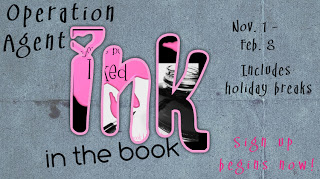
Join now! Operation Agent Ink

Fantastic things are going on over at Ink in the Book, and it's not too late for you to join in. It's called Operation Agent Ink, and it's a great way to work on your WIP and possibly nab an agent, too!

The event runs from November 1st through February 8th, with breaks for the holidays. It's a workshop-style event, and culminates in February with a pitch session with some amazing agents. Best of all, you'll know what the agents are looking for.

Check out all the details of what Operation Agent Ink will do for you so you can decide if it's a good fit for your needs. It doesn't matter if you're starting a new novel, in the editing stage, or all finished.

The workshops running through the event include:
Novel Writing From the Beginning
Novel Writing: Wading Through the Middle
Creative Inspiration
Revisions and Edits
The Submission Process
Agent Interviews and Thoughts

Check out the links to workshop downloads and a list of literary agencies already committed to participate.  And here is the first wish list from some of the participating agents.

If you're interested, you can sign up now, until November 7th. Only those who sign up will be able to pitch to the agents in February. This is a great opportunity that goes hand-in-hand with NaNoWriMo, for those participating. Since it's spread over several months, it won't eat all your time.

Are you up for Operation Agent Ink?

I touched a 400-year-old book yesterday

An original King James Bible
I love old books. I have a whole shelf full of vintage books, and I even own a history book from the 1600s. But yesterday I had the opportunity to turn the pages of an original King James Bible, printed on Gutenberg's printing press in 1611.

The book is in amazing condition for its age. The cover was replaced, but the pages are intact and easy to read. Because the paper was made from cotton (like money), it lasts a lot longer than paper made from wood pulp.

Of the four bibles I saw yesterday, the oldest was printed in the 1500s. All these bibles came with a guarantee of being burned at the stake if you so much as looked at them. You can imagine what happened to the men who translated and printed them. Yup.

These historic books are part of a traveling exhibit of volumes that show bibles throughout history. Included in the show are pieces of of the Dead Sea scrolls and cuneiform tablets with Old Testament writings. Also shown are ancient coins, pictographs, medieval rabbinic scrolls, and even hand-written commentaries from Martin Luther.

The Bible Through History show will run in Colorado Springs at the Glen Eyrie castle from September 1-12, 2012. If you're in the area, it's a fantastic history lesson, and not just for people of faith. Imagine if your own self-publishing efforts put your life in danger.  
How motivated would you be to get your books into print?
The guide holding the 1500s bible. The King James is the largest one.

It's Time for WriteOnCon: a free online writing conference

It's that time again. A conference for those of us who don't have tons of money, tons of time, or who live so far out that flying to a writing conference is out of the question. WriteOnCon is back. On August 14th and 15th, writers will engage through thirty-five workshops, forums, keynotes, and live events.

One of the coolest things WriteOnCon is doing this year is called Ninja Agents. In this forum, you can post your writing sample or query letter, and one of thirteen agents will stop in from time to time and post comments. It's possible to get agent requests from this forum. Even if you attended an in-person conference, you'd be hard-pressed to pitch to that many agents.

 Who are the Ninja Agents? Here's a list (links are to those highlighted on Agent Friday posts):

Natalie Fischer, with Bradford Literary
Michelle Andelman, with Regal Literary
Kathleen Ortiz, with Nancy Coffey Literary
Ammi-Joan Paquette, with Erin Murphy Literary
Jessica Sinsheimer, with Sarah Jane Freymann
Roseanne Wells, with Marianne Strong Literary
Joanna Volpe, with Nancy Coffey Literary
Weronika Janczuk, with Lynn C. Franklin
Suzie Townsend, with FinePrint Literary
Carlie Webber, with the Jane Rotrosen Agency
Alyssa Eisner Henkin, with Trident Media
Marietta Zacker, with Nancy Gallt Literary
Kat Salazar, with Larsen Pomada Literary Agents

 Some of the workshops and sessions planned this year are:
* How to Get Started With Social Media: DON’T Do All The Things!
* Choosing the Right Critique Partners
* Hooks and Killer First Lines
* Picture Book Query Critiques 
* What is Voice, and How do I Get it?
* World-building in Science Fiction and Fantasy
* Plotting with 3×5 cards
* Building Characters into Real People
* He Said, She Said, Creating sexual tension through dialog
* Differences between YA and MG and the challenges of writing both
* The Inside Scoop: Get Your Query Noticed
~and there's lots more.

Want to join in? Here are the basics:
Click here for the super-quick registration.
Check out the amazing faculty here and here.

Do you think you'll attend? I've already got several workshops marked down. And if your schedule won't allow you to participate live, just check the forums when you can. Everything will still be there.

Finish Your Novel With this Free Course

Only one week left of NaNoWriMo! If you're running low on motivation, here's a classic post that might help you rev your engines.

Thousands upon thousands of people begin novels. Only a tiny fraction of those actually finish, and from these, publishers choose the ones we see in bookstores. Why do so few complete their novels? Because it's hard work. Really, really hard work.

I know. I'm trying to finish my second novel, and it's just as difficult as the first. I'm over the excitement of a new idea. I've lived with my characters so long that I'm no longer infatuated with them. And frankly, reading the same story over and over gets old. As a writer, I begin to wonder if anyone out there would even like this story.

Fortunately for me (and you, too), I discovered author Timothy Hallinan's website. I couldn't wait to write this post. I even sent his link via Facebook to my writing friends so they wouldn't have to wait until this post came out.

Why? Because Timothy Hallinan is another one of those authors who gives back. He has posted a free course called Finish Your Novel, which is not only entertaining and practical, but humorous, too.

Hallinan's belief is that finishing a book is what made him a writer, not just working on something. Once he figured out how to successfully finish novel after novel, he came up with 30 steps, separated into five categories. Each of the short sections takes only a few minutes to read. You might even want to bookmark his page so you'll remember to read once step each day of the month.

Most of us have at least one manuscript that we've begun and then set aside for one reason or another. Listen to Hallinan's take on this:

"The sad fact is that much of the time, the book they abandon is better than the one they set out to write. It's like a prospector who goes out looking for iron pyrites, finds gold, and throws it away."

Hallinan also blogs about writing at The Blog Cabin. On Wednesdays he has an interesting series where he interviews published authors about whether they write with an outline or not, in Plotting vs. Pantsing.

So, I've begun working through Hallinan's course. It's not hard. It's like getting a little pep talk every morning before I start typing. And who couldn't use one of those?

Where are you in your NaNoWriMo novel? Will it be 'finished' next Wednesday?
I'm planning to reread through this course during the month of December. How about you?

Get a Free Education at Pitch University

I'm surprised I hadn't come across Pitch University in my internet browsing. What a wealth of information! Even if you're not ready to pitch right now, you're probably ready to learn. And the folks at Pitch University have worked incredibly hard to provide you the tools you need.

The amount of articles, videos, and audios is amazing. Start at the home page, and scroll down to Pitching 101 You'll want to do some browsing on the site to get familiar with all they offer.

Begun by Diane Holmes, Pitch University is a safe and comfortable place for writers--no matter how hesitant or shy--to learn to verbalize their story. Holmes grew up in a family of salesmen, and even majored in marketing, but she confesses, "I suck at pitching." Makes you feel better, huh?

One of the events at Pitch University is a monthly "PitchFest". The organizers host an agent or editor who is currently looking for books. Participants are encouraged to pitch to the professional, via query letter, audio, or video.

Among the many offerings at Pitch University are:


The Pitch U Writers Manifesto (which will ease your mind)


The first of 27 lessons on pitching. Scroll down on the right to see the list.


The free Monthly Pitch newsletter (signing up gets you the free bonus "10 Reasons You Suck at Pitching Your Book")

Do you feel comfortable with your pitch? Have you pitched in the past? How did it go?

Free Course: Twenty Master Plot Exercises

Here's a great course to improve your plotting. Or maybe your story is stuck, and you'd like to take it in a new and fresh direction. I came across a resource that might give you the building blocks you need.

Writer Mike Barker, inspired by the book 20 Master Plots (and how to build them), has put together a course complete with exercises, that takes writer through the different types of plots. Reading through the course, you get the sense that you're sitting in a workshop with Barker, soaking in the information.

Here's the different components of his course:

Introduction: the eight common denominators of a good plot
Master Plot 1: The Quest
Master Plot 2: Adventure
Master Plot 7: The Riddle
Master Plot 10: Temptation
Master Plot 11: Metamorphosis
Master Plot 12: Transformation
Master Plot 13: Maturation
Master Plot 15: Forbidden Love
Master Plot 16: Sacrifice
Master Plot 17: Discovery
Master Plot 18: Wretched Excess
Master Plot 19 & 20: Ascension & Descension
Finishing Up: a final checklist for your plot
If that's not enough for you, Barker has a list of 281 writing exercises to try.               

What resources do you use to fine tune your plot? Or do you just wing it?

I Wanna Be a Writer: Free Novel-Writing Videos


Authors Traci Hall and Kathleen Pickering have teamed up to give new writers the tools they need to get started. Each video is only a few minutes long, and will give the 'big picture' steps for writing a book, starting with the idea, and going all the way to submission.

Visit the authors' websites at Traci Hall and Karen Pickering for more information on these helpful ladies.


What's the best tip on novel-writing you've received?


Free Resources from Holly Lisle

I love authors who give back. I've got a whole list of them. Authors who've reached their goal of publication, and despite the crazy schedule of promoting their books while writing new ones, still pass on vital information through their blogs, free courses, ebooks and workshops.

Holly Lisle is one of these. Yes, she offers some courses for a fee, but this author gives away a staggering amount of informations. Lisle is a fantasy, science fiction, and suspense writer, but she is an excellent teacher of writing. No matter what your genre, you'll learn something from this hard-working author.

Newsletter. Holly's free newsletter is full of information on the craft of writing. And when you sign up, she'll send you a free ebook called 396 Books and Other Resources Writers Recommend to Kickstart Your Writing, Stand your Thinking On Its Head, and Vastly Increase Your Ability to Write What You Know. Despite the incredibly long title, the list of books (and why they are helpful) is a great resource that I've referred to often.

Articles and Ebooks. Holly offers a long list of articles for authors to read.

Besides the free ebook that comes with Holly's newsletter, she has another free one called Mugging the Muse: Writing Fiction for Love AND Money. The same page has links to a great writer's forum called Forward Motion. In case you're curious about her writing, Holly has posted two of her novels free online.

Workshops and Courses. Are you having a hard time with writing dialogue? Holly offers a free Dialogue Workshop to help you finetune what your characters are saying. For writers in the middle of plotting their novel, check out Holly's free Professional Plot Outline Mini-CourseWriting fantasy? Do your characters speak a different language? Don't miss Holly's free Create a Language Clinic.

What would you like to give away when you're an established author?

Get to Know Your Characters With Character Charts

I'm on my summer vacation in a Colorado ski town, where the snow is still five to ten feet deep. Enjoy this post you may have missed from early last year.

You know how it is. You walk into a room full of strangers, and start off with small talk. If you're lucky, you discover something you both have in common that extends the conversation a little further. But to truly get to know someone, you'll have to spend quite a bit of time together. Sharing hobbies, shooting the breeze, and going through the ups and downs of life together help you understand another person intimately.

When writing a novel, It's necessary to spend considerable time getting to know the characters in order to make them seem three-dimensional to  readers. It's like writing a biography of a person you've just met.

That's where character charts come in. You build a file on each character. There are questions you probably never thought to ask your protagonist--like what he tends to do when he's nervous, or what is the secret she's never told anyone.

I've found quite a few character charts peppering the internet. Each one is a little different, and you might want to try out a few to see which ones work the best for your characters. Once you've decided on one (or more), sit down and have a cup of coffee with one of your characters. You might be surprised at what they share with you.

Character Charts to Check Out
For the visual oriented writers, here is a fascinating group of 29 pages(.pdf)--everything from character attributes, to the evolution of a character's arc through the story. While there are a few pages I'm not sure how to use, I will definitely print out an make use of several.

A comprehensive chart (you can click on the .pdf download or see it on the webpage), includes a link to an astrological chart for your character.

The folks at Creative-Writing-Solutions have a whole group of charts. If you write fantasy, you may need a chart to help you identify the details of a new race, or a particular creature. They've also got charts for pets, vehicles, buildings, and new lands. You can access all of them here.

Writer's Village University has a free Character Building Workshop, with online quizzes that help you narrow down your character's traits.

Sandra Miller has compiled a list of questions you can ask your character in her character exercises.


What have you found to be the best way to get to know a character? Have you ever been surprised by what you've learned?


Need Help Finishing Your Novel? Check Out This Free Course

During this week's spring break, I'm writing furiously. This post is an earlier--and popular--one that many new readers may have missed.
 
Thousands upon thousands of people begin novels. Only a tiny fraction of those actually finish, and from these, publishers choose the ones we see in bookstores. Why do so few complete their novels? Because it's hard work. Really, really hard work.

I know. I'm trying to finish my second novel, and it's just as difficult as the first. I'm over the excitement of a new idea. I've lived with my characters so long that I'm no longer infatuated with them. And frankly, reading the same story over and over gets old. As a writer, I begin to wonder if anyone out there would even like this story.

Fortunately for me (and you, too), I discovered author Timothy Hallinan's website last week. I couldn't wait to write this post. I even sent his link via Facebook to my writing friends so they wouldn't have to wait until this post came out.

Why? Because Timothy Hallinan is another one of those authors who gives back. He has posted a free course called Finish Your Novel, which is not only entertaining and practical, but humorous, too.

Hallinan's belief is that finishing a book is what made him a writer, not just working on something. Once he figured out how to successfully finish novel after novel, he came up with 30 steps, separated into five categories. Each of the short sections takes only a few minutes to read. You might even want to bookmark his  page so you'll remember to read once step each day of the month.

Most of us have at least one manuscript that we've begun and then set aside for one reason or another. Listen to Hallinan's take on this:

"The sad fact is that much of the time, the book they abandon is better than the one they set out to write. It's like a prospector who goes out looking for iron pyrites, finds gold, and throws it away."

Hallinan also blogs about writing at The Blog Cabin. On Wednesdays he has an interesting series where he interviews published authors about whether they write with an outline or not, in Plotting vs. Pantsing.

So, I've begun working through Hallinan's course. It's not hard. It's like getting a little pep talk every morning before I start typing. And who couldn't use one of those?

Where are you in finishing your novel?

Fuel for the Fire: Take a Class to Ignite Your Writing

It wasn't writer's block. I wasn't stuck. I wasn't out of ideas. I had just lost the energy to write. Rehashing the same chapters over and over, trying to discover that spark to make them come alive, had sapped the creativity I needed to move forward.

Have you been there?

Since it's my birthday this month, I gave myself the present of taking a writing class. I longed to take a class from Margie Lawson, a trained psychologist who uses her decades of knowledge to teach writers how to pull readers into their stories. 

Lawson's lectures and assignments have lit a fuse that is igniting my passion to not only finish my novel, but to make what I've written far better than it was. Do you need a little inspiration?

From Lawson's website: 

"I am fascinated with the emotive power of words. When a scene grabs me, I analyze it, dissect it, figure out what the author did that worked.
 
How can writers 'up' the emotive power of their work?  By tuning in to the nuances of their characters’ nonverbal communication.  By writing visceral emotion and body language to strengthen subconscious connections with the reader.  By editing deep.  By writing fresh.

Writers work to capture the perfect balance of dialogue, visceral emotion, body language, action, setting, internalizations, and tension for each scene.  The goal is to entrance the reader, lead them into your fictional world, and make them beg to stay."

 Lawson's expertise will have you writing stronger, analyzing for weaknesses, and developing the ability to hook readers with the emotional intensity of your writing.

While Lawson's classes are not free, they are so reasonably priced, you'll be surprised. I'm taking Empowering Character Emotions, a month-long class that will net me over 300 pages of notes from Lawson, including individual critique of my assignments. In the first three days of class, I felt I had already got my $30 worth. For writers who can't invest the time in an online class, Lawson sells the complete lecture packets for any class for $22.

I've been learning from Lawson for years. In her free newsletter, she shares her analysis of current writers, and I learn something every time. Lawson's blog features "how-to" interviews with successful authors. And if you'd like to see the effects of the "deep editing" techniques she teaches, check out her deep editing analyses. Just reading her comments will get you thinking about your own writing.

Would you like to win a one-hour deep-editing consultation with Lawson? You have an opportunity to enter her Dare Devil Dachshund contest each month. The prize includes a pile of goodies and a one-hour Skype chat with Lawson about 15 pages of your manuscript.

I don't receive anything from letting you know about Lawson. I just believe that writers want to know about resources that can make them better writers.

Have you been in a place where you've lost your spark? What helped ignite your desire to write?

Free Resources from Martha Alderson, AKA the Plot Whisperer

I'm so excited about today's free resource. I still adore Rubik's Cube Plotting, and Holly Lisle's Free Plot Outline Mini-Course, but Martha Alderson, who goes by the name of The Plot Whisperer, is offering her valuable whispers. For free.

Alderson, who consults with novelists, memoir writers, and screenplay writers, is posting her advice, bit by bit on YouTube. She has her own YouTube channel, which to date contains nineteen short videos giving writers the keys to perfect plotting. Over the weekend, as I nursed a cold, I watched all the videos, taking copious notes as I did. And while I've learned a lot about plotting in the past several years, the Plot Whisperer taught me even more.

One of the things I liked about Alderson's tips are how she shares when to employ your plot points, not just the fact that you need them. You've probably heard about planning your first turning point. But do you know exactly where to place it within the pages of your manuscript? Likewise the crisis and the climax (which, in case you didn't know, are two separate events that Alderson explains clearly).

Alderson highlights her points by sharing how the techniques have been used in books of all kinds--from classic literature, to modern novels, to picture books. Picture books have a turning point? The answer is yes. In the last few days I've tested her advice, flipping through novels to see at what pages they place specific plot points. And you know what? Alderson knows what she's talking about.

Alderson has recorded all this information in her book, Blockbuster Plots Pure and Simple, which I've ordered and can't wait to receive. But she also shares even more information on her website, Blockbuster Plots for Writers, and she blogs frequently with more plotting tips. You may also want to sign up for her free newsletter or follow her additional tips on Twitter. It's no wonder her site has earned a spot in Writer's Digest 101 Best Websites for Writers two years running.

After watching Alderson's plot videos, I've been able to tighten my plot in some areas it was lacking, and I feel more confident about the chapters I've written. Try listening to Alderson's whispers--they could make a big difference for you.

What helps you most in your plotting?


Free Resources from Bob & Jack's Writing Blog

 I think you're going to be thrilled with today's resource. When I researched Tuesday's post on strong verbs, I found a blog with so many amazing resources, I've spent a couple of days browsing. It's time to feature Bob and Jack's Writing Blog.

Jack Remick and Robert J. Ray are successful novelists independently. Together, they wrote The Weekend Novelist Writes a Mystery, one of several sequels to The Weekend Novelist by Robert J. Ray. And together they host a blog bursting with information for fiction and memoir writers. If you've been looking for a site that not only gives detailed information on the craft of writing, but writing exercises, too, you've found the right place.

Bob and Jack's goal is to get you writing. To give you lines to get you started. Instead of just reading about how to write, they'll make you do it. I can't ask for anything better. It's like being a kid in a candy store.

On their site, Bob and Jack offer not one, but seven free writing courses. Courses like From Memory to Story and A Course in Memoir. Elements of Dramatic Writing or Make Bad Writing Better.

Are you a visual writer? They post diagrams to help writers of particular genres. The Birth to Now Diagram for memoir writers blew me away. But don't worry if you aren't writing memoir. There are diagrams for mystery, crime, and the hero's journey.

Of course there are plenty of articles on craft. Like How to Read Like a Writer, a three-part series that will make you a better reader. I'll definitely begin using the Scene Checklist--seventeen critical elements of a scene. If you're just getting started, check out the Beginner's Mind, an article explaining how to face a blank page, and use a timer to help you get going.

I've barely scratched the surface of Bob and Jack's blog, and that doesn't even include a separate site they maintain, based upon the Weekend Novelist books. The Weekend Novelist site has many more resources for the hungry writer.

I'm so glad I came across such giving authors. Many others would charge for the information they give away. Makes you want to go buy some of their books, huh?


What is Copywriting? Find Out in a Free Webinar from American Writers & Artists, Inc.

Did you read an email ad this morning? Listen to a radio advertisement or TV commercial? Those words were written by copywriters


Copywriting (not to be confused with copyright, as in the rights to someones words) is basically writing to promote a business, a product, or an idea. It is a type of freelance writing. Copywriting touches us every day in magazine and newspaper ads, website content, brochures, radio and TV scripts, press releases, letters and mass mailings, even billboards. As a writer, you have the opportunity to learn how to earn by copywriting. It's a great way to help pay the bills while you're on the road to publication.


To be a good copywriter, you must work to develop these qualities:


Be creative. Dull copy won't draw in customers. Copywriters must paint a picture of the product or service that catches the consumer's interest.


Be concise. Copywriters usually work within a tight word limit. Being able to get to the point quickly, yet creatively is an art. Not to mention, there is usually a quick deadline.


Aim for conversion. Conversion is the term for action on the part of a consumer. The person who scans a web page, and then clicks the "buy" button, has been "converted", meaning the writer has convinced them to take action. This calls for compelling writing.


Excellent copywriters make large salaries, but even entry-level copywriters can look forward to a paycheck. Sites like Elance and Odesk list companies looking for copywriters.


If you're interested in learning more about whether copywriting is for you, American Writers & Artists, Inc. is hosting a free webinar to give writers more information.


CopyBlogger lists 10 Steps to Effective Copywriting, along with many other resources.


Here's a link to a series of Free Copywriting Tutorials.


And even more resources from CopyWriting.com.


Do you think copywriting might be for you? 

Writer's Groups: Writers Cafe, The Online Writing Community

The next writer's group is yet another good one. It boggles the mind how many excellent writing groups exist in cyberspace. Writers Cafe bills itself as "an online writing community where writers can post their work, get reviews, befriend other writers, and much more".


No matter whether you write poetry, novels, short stories, novels, scripts, or screenplays, you'll find similar-minded writers at Writers Cafe. And it's free.


Connect. You can join one or more of a dizzying number of groups in every genre you can imagine. Or hang out in the forums, chatting about craft, publishing, and genres. Search their list of publishers, literary agents, and literary magazines.


Craft. Choose from a variety of free courses on everything from dialogue to defeating writer's block. Post your work for critique, or sharpen your skills by critiquing others.


Contests. There are hundreds of free writing contests available at Writers Cafe. Poetry. Short story. Graphic novel. You name it. The list of contests is searchable by genre so you can find exactly the one you want.


Want to check out the many other writing groups we've featured so far? Click here. If you've joined an online group worth checking out, let us know in the comments. 


Plot Outline Mini Course from Author Holly Lisle

In the spirit of preparing for Nanowrimo next month, I'm posting about several different plotting methods. Hopefully, like Little Red Riding Hood, you'll find one that fits "just right". Last week, we took a look at Rubik's Cube Plotting. This time, I'm letting you know about a fantastic course on plotting, by a prolific author.


And it's free.  Sadly, it's no longer free, but almost! It's now just $0.99.


I've already written a post about the very generous Holly Lisle, author of thirty-two books, so let's take a look at her plotting course. Nearly 600 writers have already signed up.


Why is this course such a fantastic one for Nanowrimo? Read this quote from Lisle's sign-up page: 


"Even if you have NO story idea, NO characters, and NO experience, you can finish a complete working plot outline in just 7 lessons . . . for free!"


What will you learn in just seven downloadable lessons? This is part of the description on Lisle's site.


Lesson 1: What is NOT a Plot
Discover a secret about plots that even most professionals don't know---a secret that has led way too many writers, including countless full-time novelists, in circles trying to figure out why their story is going wrong.


Lesson 2: Mix 'n Match Conflict
Even if you have no idea what you want to write about, you can build a solid foundation for a good story in just minutes.


Lesson 3: Questions and Answers
Once you have conflict under control, you'll find out one technique for giving your story and characters depth, and making your story unbelievably richer and more interesting.


Lesson 4: Candy Bar Scenes
You'll discover and apply one critical technique for keeping your story flowing and keeping your interest high from beginning, through treacherous story middle, to gripping ending.


Lesson 5: Ordering Scenes for Conflict
In your fifth week, you'll experiment with structure to discover how you can best present your story to your reader.


Lesson 6: Filling in the Blanks
In week six, you'll hunt down empty spaces between your candy bar scenes, and fill them with story that MATTERS---not with pointless wandering, characters who sit around thinking, or dialogues that go nowhere.


Lesson 7: Plotting as You Go
Stories change as you write them. In your final week of class, you'll learn how to adapt your plot outline to bend with the changes---without breaking your story.


Are you hooked yet? I'm signed up. Lisle recommends spending only 15 minutes per day planning your story.


Check out The Free Plot-Outline Course page for more details and testimonials before you decide. Who's with me?

More Free Stuff From Writer's Digest

I love Writer's Digest Magazine. Reading it every month is like getting a shot in the arm and renews my excitement to write. If you, like me, don't have extra money for a subscription, this is the item to ask for on your birthday, or Christmas (thanks, sis!).

My favorite Writer's Digest issue is the 101 Best Websites for Writers. If you live overseas, in a remote area, or just have financial constraints, then the internet is your main source of writing information, instruction, and interaction. The Writer's Digest website issue lists the top websites and blogs that writers vote for.

Normally, you'd have to subscribe to the magazine, buy it at the newsstand, or find it in the library. But right now, if you sign up for the informative Writer's Digest free newsletter, you'll get a .pdf download of the entire list, exactly as it looks in the full-color magazine.

What's on it that's worthwhile? The websites are divided into categories: writing advice, general resources, jobs and markets, online writing communities, agents, publishing & marketing resources, genres & niches, and just for fun. Here are a few examples:

If you have any kind of writing question, check out the Ask Allison site.

Winning Writers is a great site for those who want to enter legitimate contests, with advice and alerts about scams.

And don't forget to visit Cool Stuff 4 Writers, a website with interviews, resources and writer's questions answered.

There's another freebie from Writer's Digest. Right now, they're offering a free webinar on getting published. This webinar (a "web seminar")  is on-demand, meaning you don't have to be available on a particular date at a certain time. You just listen in whenever it's convenient.

This webinar is conducted by an experienced writing coach, who answers writers frequently asked questions. Check out a list of the topics she touches on.

I'm always looking for more websites and blogs that give great information to writers. If you've found a favorite, leave a link in the comments. And if you'd like to nominate that blog for next year's 101 Best Websites for Writers, send an email to writersdig@fwpubs.com with "101 Best Websites" as the subject.

Free Course: Finishing Your Novel

Thousands upon thousands of people begin novels. Only a tiny fraction of those actually finish, and from these, publishers choose the ones we see in bookstores. Why do so few complete their novels? Because it's hard work. Really, really hard work.

I know. I'm trying to finish my second novel, and it's just as difficult as the first. I'm over the excitement of a new idea. I've lived with my characters so long that I'm no longer infatuated with them. And frankly, reading the same story over and over gets old. As a writer, I begin to wonder if anyone out there would even like this story.

Fortunately for me (and you, too), I discovered author Timothy Hallinan's website last week. I couldn't wait to write this post. I even sent his link via Facebook to my writing friends so they wouldn't have to wait until this post came out.

Why? Because Timothy Hallinan is another one of those authors who gives back. He has posted a free course called Finish Your Novel, which is not only entertaining and practical, but humorous, too.

Hallinan's belief is that finishing a book is what made him a writer, not just working on something. Once he figured out how to successfully finish novel after novel, he came up with 30 steps, separated into five categories. Each of the short sections takes only a few minutes to read. You might even want to bookmark his  page so you'll remember to read once step each day of the month.

Most of us have at least one manuscript that we've begun and then set aside for one reason or another. Listen to Hallinan's take on this:

"The sad fact is that much of the time, the book they abandon is better than the one they set out to write. It's like a prospector who goes out looking for iron pyrites, finds gold, and throws it away."

Hallinan also blogs about writing at The Blog Cabin. On Wednesdays he has an interesting series where he interviews published authors about whether they write with an outline or not, in Plotting vs. Pantsing.

So, I've begun working through Hallinan's course. It's not hard. It's like getting a little pep talk every morning before I start typing. And who couldn't use one of those?

Free Resources from Holly Lisle

I love authors who give back. I've got a whole list of them. Authors who've reached their goal of publication, and despite the crazy schedule of promoting their books while writing new ones, still pass on vital information through their blogs, free courses, ebooks and workshops.


Holly Lisle is one of these. Yes, she offers some courses for a fee, but this author gives away a staggering amount of informations. Lisle is a fantasy, science fiction, and suspense writer, but she is an excellent teacher of writing. No matter what your genre, you'll learn something from this hard-working author.


Newsletter. Holly's free newsletter is full of information on the craft of writing. And when you sign up, she'll send you a free ebook called 396 Books and Other Resources Writers Recommend to Kickstart Your Writing, Stand your Thinking On Its Head, and Vastly Increase Your Ability to Write What You Know. Despite the incredibly long title, the list of books (and why they are helpful) is a great resource that I've referred to often.


Articles and Ebooks. Holly offers a long list of articles for authors to read.
Assess Your Novel-Writing Progress With These Four Questions 
Create, Complicate, Resolve: The Keys to Keeping Your Readers Interested
4 Thinking Barriers That Keep You From Writing...And Succeeding 
4 Steps To Finding Your Novel's Market 
Life, Passion... Deadline 
Planning A Heart-Stopping Story 
Interweaving Your Novel's Themes And Subthemes 
Dig Deeper With Your Novel's Subthemes 
Playing Chicken With Your Story 
Burying Your Novel's Message 
How To Find Your Novel's Pulse 
Does Your Novel Have A Heartbeat? 


Besides the free ebook that comes with Holly's newsletter, she has another free one called Mugging the Muse: Writing Fiction for Love AND Money. The same page has links to a great writer's forum called Forward Motion. In case you're curious about her writing, Holly has posted two of her novels free online.


Workshops and Courses. Are you having a hard time with writing dialogue? Holly offers a free Dialogue Workshop to help you finetune what your characters are saying. For writers in the middle of plotting their novel, check out Holly's free Professional Plot Outline Mini-CourseWriting fantasy? Do your characters speak a different language? Don't miss Holly's free Create a Language Clinic

LinkWithin

Related Posts with Thumbnails